
This restaurant-style balsamic vinaigrette is sharp, garlicky, and perfectly emulsified. It's a salad staple from my former pizza parlor that I still make regularly (but in much smaller batches).
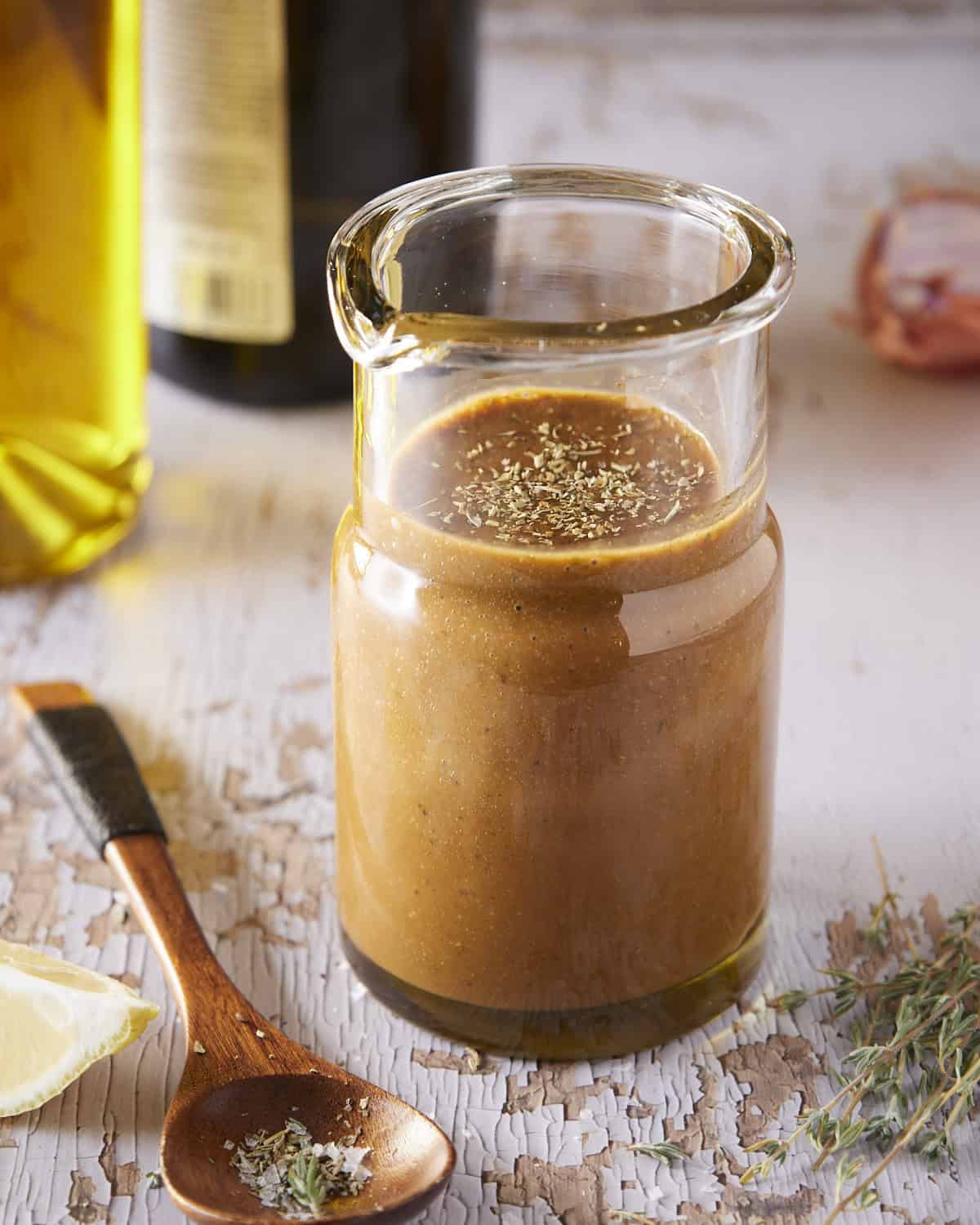
I've taught countless people how to make this dressing over the years. A classic restaurant-style balsamic vinaigrette relies on emulsification: a slow, steady drizzle of oil whisked into a vinegar base. It's not the easiest of techniques to master, but with the help of a personal blender, it's super easy!
When personal blenders came along, everything changed for getting a perfectly emulsified vinaigrette. Suddenly, what once took patience and precision became quick and foolproof.
I'm so excited to share this recipe with you. It is so easy now that anyone can make this dressing with minimal effort.
Table of contents
Why You'll Love This Balsamic Vinaigrette
- Restaurant-quality flavor: Perfectly emulsified, creamy, and full-bodied with little (if any) separation.
- Make-ahead friendly: Keeps up to 2 weeks in the fridge.
- Versatile: Delicious on greens, grilled vegetables, chicken, or even roasted potatoes.
- Classic chef technique made simple: Get the flavor and silky texture of a restaurant-style vinaigrette without all the whisking or complicated technique.
- Quick to make: Ready in under 5 minutes with common pantry staples.
What Is An Emulsified Vinaigrette?
An emulsified vinaigrette is a smooth, creamy dressing made by combining two ingredients that don't normally mix (oil and vinegar). When blended or whisked together with an emulsifier (like mustard or egg yolk), the oil breaks into tiny droplets that evenly suspend throughout the vinegar, creating a thick, stable mixture instead of separating into layers.
This classic technique gives your vinaigrette a rich texture and balanced flavor that clings beautifully to salad greens.
How Does A Personal Blender Make Emulsifying Easy?
When you use a personal blender, the blender does all the tricky emulsifying for you. The high-speed blades instantly whip air into the mixture and break the oil into fine droplets, creating a perfectly creamy, restaurant-quality vinaigrette with no slow drizzle or sore whisking arm required (so easy!!)
Unfortunately, this method does not work when using raw eggs. See these Homemade Mayonnaise or Caesar Dressing recipes for emulsification tips when using eggs.
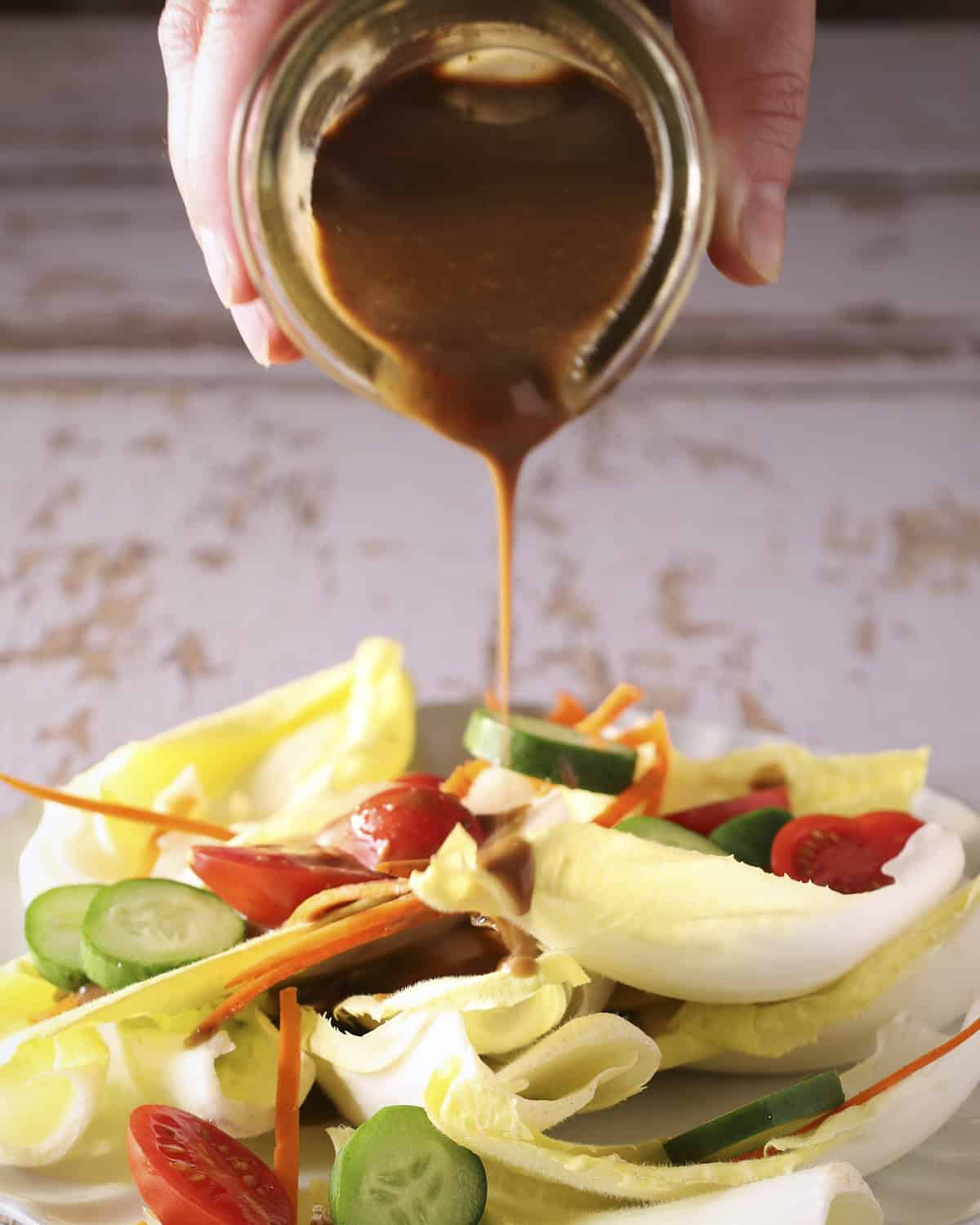
Ingredients and Recipe Notes
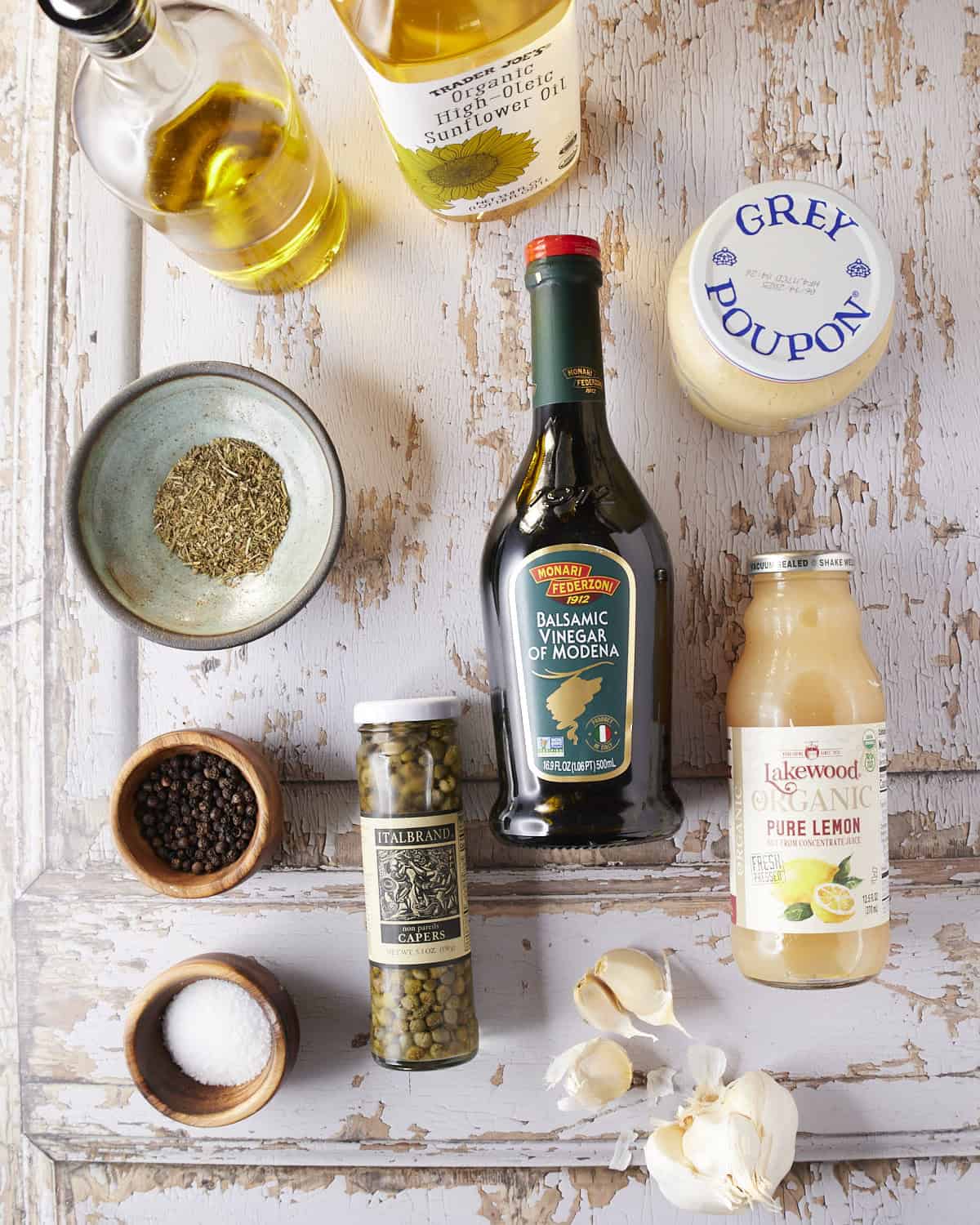
- Balsamic Vinegar of Modena - The foundation of the dressing; balanced sweetness and acidity give it depth and smoothness. This is the kind we would use at the restaurant. It's the gold standard of balsamic dressings.
- Lemon Juice - Adds brightness and sharpens the tang. Fresh is softer, bottled is punchier, both work. I love to use the bottled stuff for this recipe.
- Dijon Mustard - Helps emulsify and thicken the dressing while adding a subtle, savory bite. This is a must for a creamy vinaigrette without separation. If you don't like mustard, don't worry, you can't taste it in the final dressing. If you're super opposed to using it, replace it with roasted garlic instead.
- Capers - Bring salty, briny pops of flavor that add umami and keep the vinaigrette lively.
- Fresh Garlic - Adds warmth and aromatic depth; blending mellows the sharpness, adjust to your taste preferences.
- Italian Seasoning - Layers in herbs like oregano, rosemary, thyme, and basil to round out the flavor.
- Honey - Rounds out the dressing mid palette (wine terms..but true!)
- Kosher Salt & Black Pepper - Essential for balance; salt softens acidity, pepper adds gentle spice.
- Oil Blend (Extra-Virgin + Neutral) - Combines richness and lightness. Using all extra virgin olive oil can taste bitter, but blending the two oils keeps it smooth and balanced.
Step-by-Step Instructions
1. Mise en place
- Gather all your ingredients before you start. This is one of those small but clever chef techniques that makes it easier to follow the recipe (it makes clean up easier too).
- Finely chop your garlic and capers. (This helps them blend evenly and prevents sharp bites of raw garlic.)
2. Build your base
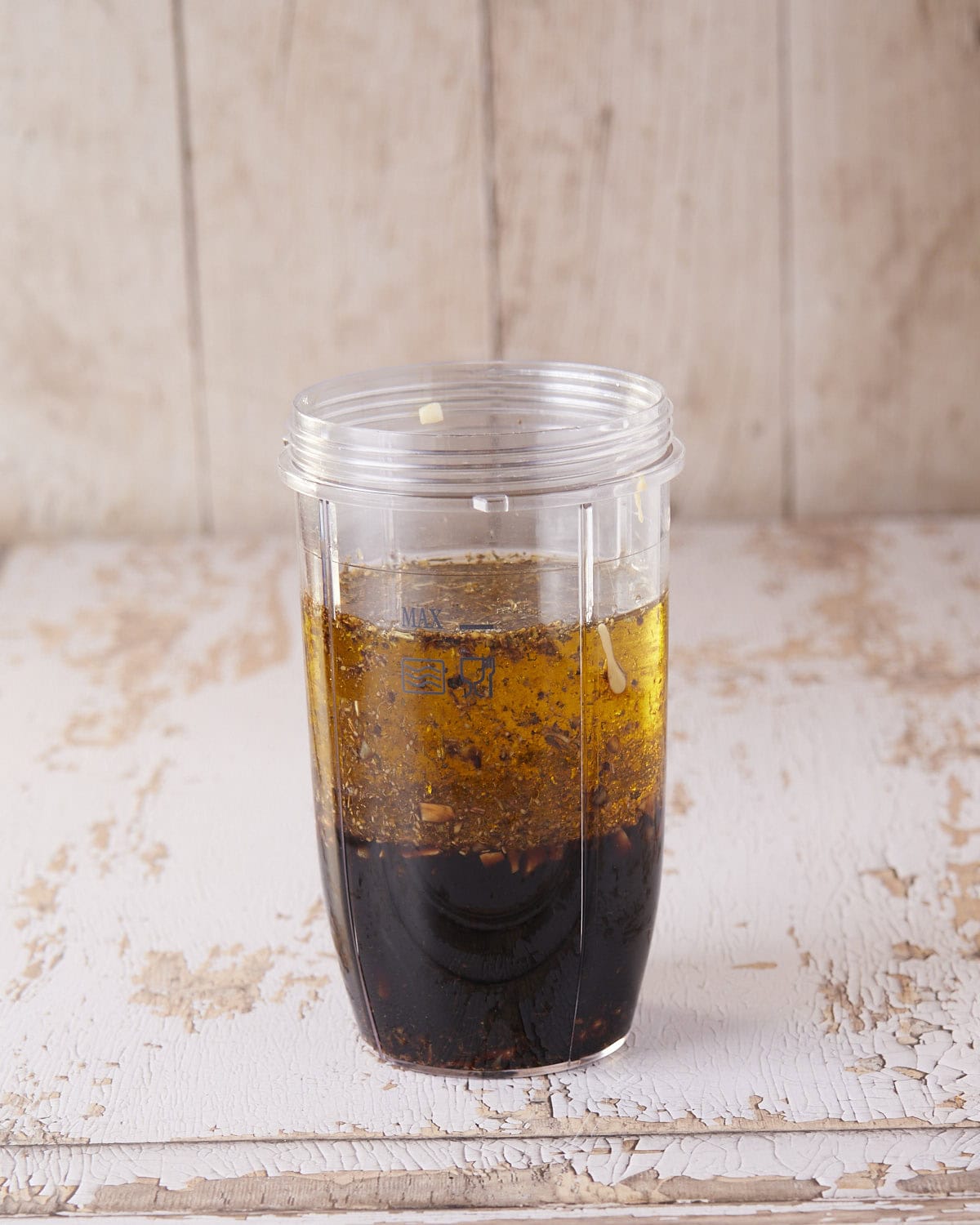
- Add the balsamic vinegar, lemon juice, Dijon mustard, Italian seasoning, honey, salt, pepper, chopped garlic, capers, and oils to your personal blender cup.
3. Blend
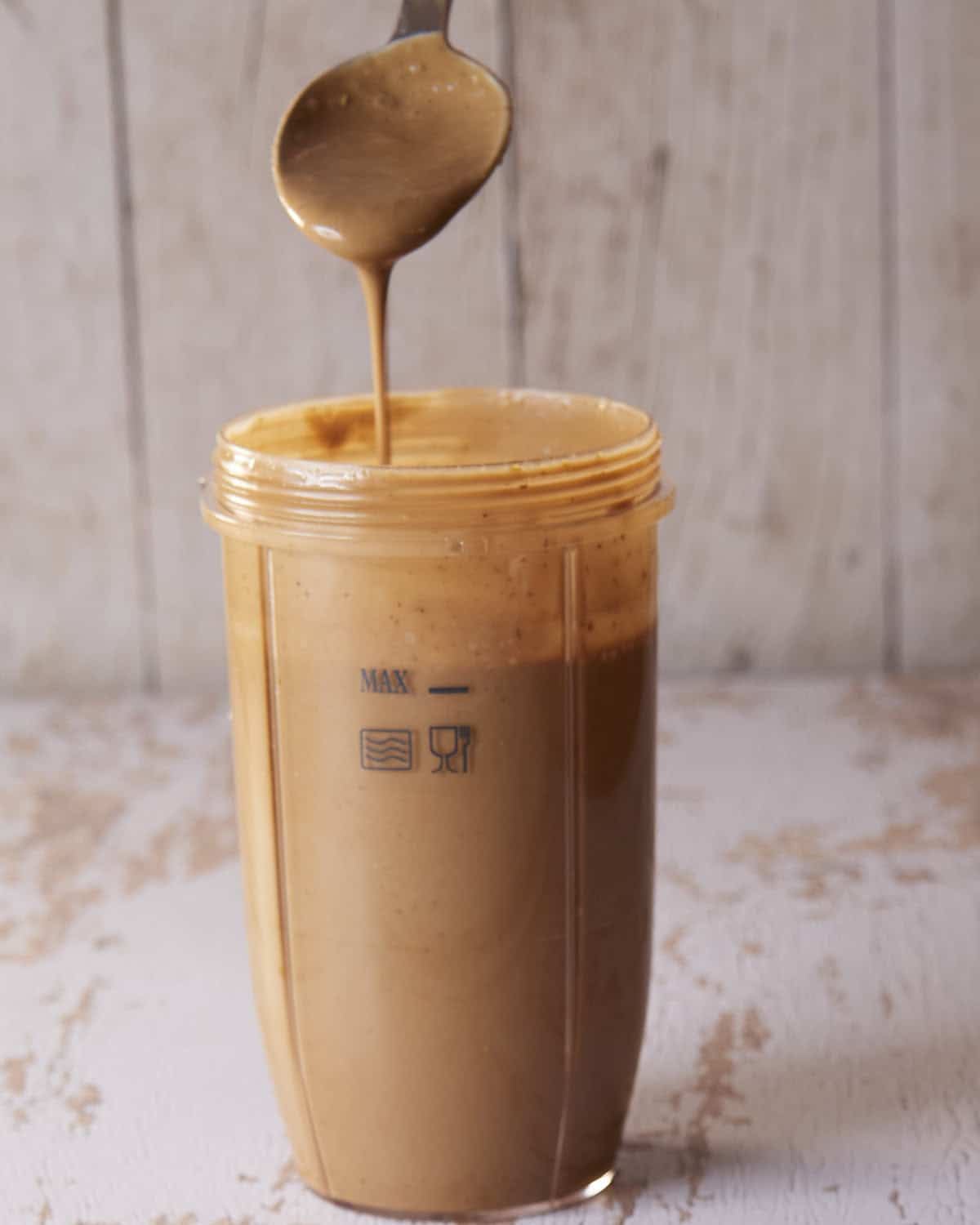
Secure the lid and blend for 20-30 seconds until thickened and creamy. That's all you have to do!
Chef's Tips
- Choose your balsamic wisely: Balsamic vinegar of Modena is my go-to and what we used at the restaurant. It's consistent and balanced, without being syrupy sweet or too acidic.
- Don't use all extra-virgin olive oil: It can make your dressing taste bitter. Blending in a neutral oil lightens the flavor and gives a smoother finish.
- If you're anti-seed oil: Try using a light olive oil instead of neutral oil, then splash in a little extra-virgin for depth.
- Use a personal blender: A personal blender instantly emulsifies the dressing without any whisking.
- Don't skip the mustard: This is a must for a creamy vinaigrette without separation. If you skip the mustard, the dressing may not emulsify as well.
Ways To Use This Dressing
- Drizzle over this Simple Arugula Salad or an Italian Chopped Salad.
- Toss with roasted vegetables or grilled chicken.
- Use as a marinade for pork, steak, or mushrooms.
- As a dip for bread bites or focaccia bread.
FAQs
A personal blender instantly emulsifies the dressing without having to slowly drizzle the oil into the vinegar and mustard base while quickly whisking or blending. The high-speed blades break the oil into micro-droplets, creating a thick, creamy texture that stays emulsified longer.
Emulsification is a chef technique that combines ingredients that normally separate (like oil and vinegar) into a smooth, stable mixture. The Dijon mustard acts as a stabilizer between them, keeping the dressing creamy rather than oily.
A mix of extra-virgin olive oil and neutral oil (like avocado, sunflower, or canola) keeps the flavor balanced. Using only extra-virgin can make the dressing taste bitter, while a blend gives a smooth, mellow finish.
Yes! It's perfect for make-ahead dinners and weekly meal prep. It keeps for up to two weeks in the fridge and actually tastes better after a day or two as the flavors meld.
All emulsified dressings will separate slightly when cold; that's normal. Just give it a shake or quick blend before using, and it will return to its creamy texture.
Recipe
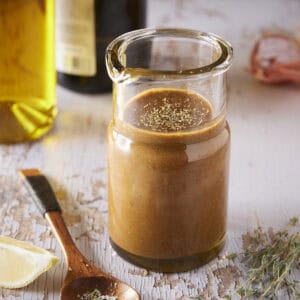
Your New Favorite Balsamic Vinaigrette
Click the stars to rate.
*Easily adjust serving size to your liking by clicking the number under servings or with the boxes below in the ingredients section.
Equipment
Ingredients
- ¾ cup balsamic vinegar of Modena I love this for its consistency and balanced acidity
- 2 tablespoons lemon juice fresh or bottled (bottled is a bit sharper, which I like here)
- 1 tablespoon Dijon mustard I use Grey Poupon
- 1 tablespoon capers finely chopped
- 1 tablespoon fresh garlic roughly chopped (about 2 fat cloves)
- 1 teaspoon Italian seasoning
- 1 teaspoon honey
- ¼ teaspoon kosher salt
- ¼ teaspoon black pepper
- ¾ cup oil blend of ½ cup extra-virgin olive oil + ¼ cup neutral oil such as canola or sunflower
Instructions
Personal Blender Method (Easiest + Recommended):
- Add all of the ingredients to a personal blender. Blend until smooth and emulsified, about 20-30 seconds. Taste and adjust seasoning as needed.
Blender or Food Processor Method:
- Combine balsamic vinegar, lemon juice, Dijon mustard, garlic, capers, herbs, honey, salt, and pepper in the bowl or pitcher. Pulse 10 times to combine.
- With the motor running, slowly and steadily, drizzle in the oil through the feed tube or lid opening. Blend until smooth and creamy, about 20-30 seconds. (The steady speed helps break down the oil droplets evenly for a perfect emulsion.). Taste and adjust seasoning as needed.
Notes
- The dressing should coat the back of a spoon when it's properly emulsified.
- Keeps up to 2 weeks in an airtight container in the fridge.
- Balsamic Vinegar of Modena: The gold standard for balanced acidity and sweetness; consistent results every time.
- Dijon mustard: Essential for creamy texture and stability. You won't taste the mustard, but it's what keeps the dressing emulsified. (Swap for roasted garlic if avoiding mustard.) If you skip the mustard, the dressing may not emulsify as well.
- Oil blend (extra-virgin + neutral): Keeps the flavor rich but smooth. Using all EVOO can taste bitter; the blend is perfectly balanced.
- Not using seed oil? Use light olive oil as your base, plus a splash of EVOO for depth.
Val
Delicious dressing. Love the creaminess of it and the complex flavors. Just brought the salad up to another level??
Suzie J.
Thank you! I'm so happy you loved it!